
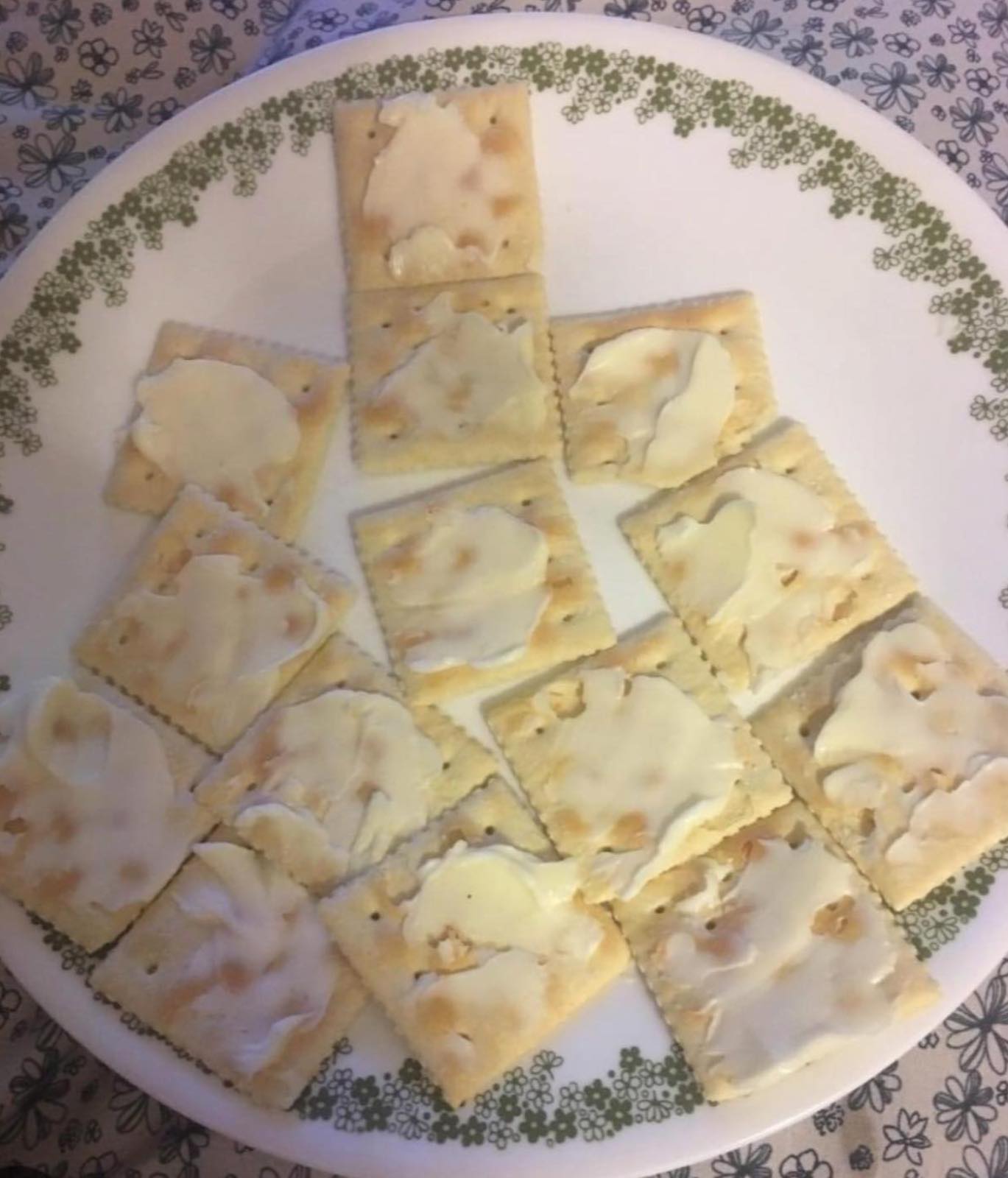
A Simple, Crisp, and Satisfying Pantry Classic**
Saltine crackers are one of those foods almost everyone has eaten since childhood. They are crisp, lightly salted, and perfect with cheese, soup, peanut butter, or even eaten plain. Many people do not realize how easy it is to make them at home with just a handful of simple ingredients. Homemade saltines taste fresher, have a better texture, and you can adjust the thickness, flavor, and salt level exactly the way you like.
Below is a full recipe written with detailed instructions and long explanations to give you complete confidence while preparing them.
Ingredients
Dry Ingredients
2 cups all-purpose flour
1 teaspoon baking powder
1 teaspoon salt
Wet Ingredients
2 tablespoons cold butter, cut into small cubes
⅔ cup water (you may need a little more or less depending on your flour)
For Finishing
2 tablespoons melted butter (optional but adds a rich flavor)
Coarse salt or flaky sea salt for topping
Detailed Instructions
Step 1: Prepare your workspace
Choose a clean, flat surface where you can roll out the dough very thin. Saltine crackers get their signature crisp texture from being rolled out much thinner than most homemade crackers.
Preheat your oven to 400°F (200°C). Line two baking sheets with parchment paper.
Step 2: Mix the dry ingredients
In a large mixing bowl, combine the flour, baking powder, and salt. Mix them well with a whisk so the baking powder distributes evenly throughout the flour. Proper distribution ensures that the crackers puff slightly and bake evenly.
Step 3: Cut in the butter
Add the small cubes of cold butter to the flour mixture.
Using your fingertips or a pastry cutter, gently rub or cut the butter into the flour until the mixture resembles coarse crumbs.
The butter should not be completely blended; tiny little pieces remaining throughout the dough create layers and improve the cracker texture.
Step 4: Add the water
Make a small well in the middle of the flour mixture and pour in most of the water.
Use a wooden spoon or your hand to slowly bring the dough together.
If the dough feels too dry or crumbly, add more water a tablespoon at a time until it forms a soft, pliable ball.
The dough should not be sticky; it should hold together smoothly.
Step 5: Knead gently
Place the dough onto a lightly floured surface and knead it gently for one to two minutes. The goal is simply to create a smooth, even dough, not to develop too much gluten.
Over-kneading makes the crackers tough rather than crisp.
Step 6: Rest the dough
Cover the dough with plastic wrap or a clean towel and let it rest for about ten minutes.
Resting helps the gluten relax, making the dough easier to roll very thin without shrinking back.
